
What Does Monash Certified Low FODMAP Mean?

Monash Certified Low FODMAP means a product has been laboratory-tested by Monash University in Melbourne, Australia and confirmed to contain low levels of FODMAPs at the listed serving size. It's the only FODMAP certification backed by the university that created the Low FODMAP diet. If a product carries this mark, someone has already done the testing for you.
If you've spent any time reading labels or researching what's safe for your stomach, you've probably seen the phrase "Monash Certified Low FODMAP" on a product and wondered what it actually means. Is it just a marketing label? Is it regulated? Does it matter?
It does matter. And it's one of the most reliable signals you can look for when you're trying to figure out what's safe to eat.
Here's what the certification involves, why it exists, and how to use it when you're shopping.
Who Is Monash University and Why Do They Matter?
Monash University in Melbourne, Australia is where the Low FODMAP diet was developed. Their research team identified the specific types of carbohydrates that cause digestive symptoms in people with sensitive stomachs and created the dietary framework that millions of people now follow worldwide.
They didn't just publish the research and move on. Monash continues to test foods, update their database, and run a certification program for products that meet their standards. When it comes to FODMAPs, they're the original source.
FODMAPs are short-chain carbohydrates that certain digestive systems struggle to absorb. When they pass through undigested, gut bacteria ferment them, which can cause bloating, cramping, gas, and other symptoms. The Low FODMAP diet works by reducing these specific triggers so your gut has a chance to settle.
What the Certification Process Actually Looks Like
Monash Certified Low FODMAP isn't a label a company can buy or self-apply. Here's what's involved:
- Laboratory testing. The product is sent to Monash University's FODMAP lab, where it's analyzed for fructose, lactose, fructans, galacto-oligosaccharides (GOS), sorbitol, and mannitol levels.
- Serving size evaluation. The lab tests FODMAP levels at specific serving sizes. A product is certified low FODMAP at a particular amount, not as a blanket statement.
- Threshold review. The results are compared against Monash's established cutoff levels for each FODMAP type. If the product falls below the threshold at the tested serving, it passes.
- Listing in the Monash FODMAP app. Certified products are added to the official Monash University FODMAP app with a green rating at the safe serving size.
This isn't a checkbox process. It's real lab work with real results. If a product doesn't pass, it doesn't get the certification.
Why Certification Matters More Than Label Claims
A lot of products say "Low FODMAP friendly" or "gut friendly" on their packaging. Those phrases don't require any testing. Any brand can use them. There's no regulation, no verification, and no accountability behind those words.
Monash Certified Low FODMAP is different because it comes with lab data. The testing confirms that what's inside the product won't exceed FODMAP thresholds at the listed serving size. You're not relying on a brand's word for it. You're relying on the university that built the science behind the diet.
For people with sensitive stomachs, this distinction is the difference between guessing and knowing. When your body reacts to hidden ingredients or unlisted compounds, "probably fine" isn't good enough.
What to Look for When You're Shopping
Here's how to use the certification in practice:
- Look for the Monash Certified trademark. It's a specific logo that products display on their packaging. If you don't see it, the product hasn't been through their testing process.
- Check the Monash FODMAP app. The app is the most up-to-date resource. You can search for certified products and see exactly what serving size is rated low FODMAP.
- Pay attention to serving sizes. A product can be low FODMAP at one tablespoon and high FODMAP at three. The certification applies to a specific amount, so check the details.
- Don't confuse "Low FODMAP friendly" with "Monash Certified Low FODMAP." Only one of those has been tested in a lab. The other is a marketing choice.
This is especially important with sauces, condiments, and packaged foods where garlic, onion, and other high FODMAP ingredients are common. A product might look safe from the ingredient list but still contain enough fructans to trigger symptoms. Lab testing catches what label reading can't.
What This Means for Sauces and Condiments
Sauces are one of the trickiest categories on a Low FODMAP diet. Garlic and onion show up in almost everything, and even small amounts of garlic bulb can be enough to cause problems. If you've been avoiding low FODMAP sauces altogether because you can't tell what's safe, certification is the fastest way to cut through the confusion.
Take sriracha as an example. Traditional sriracha contains garlic and appears in the Monash app at a very small serving size. But the margin between safe and symptomatic is narrow, and most people don't measure their hot sauce that carefully. That makes it impractical for everyday use.
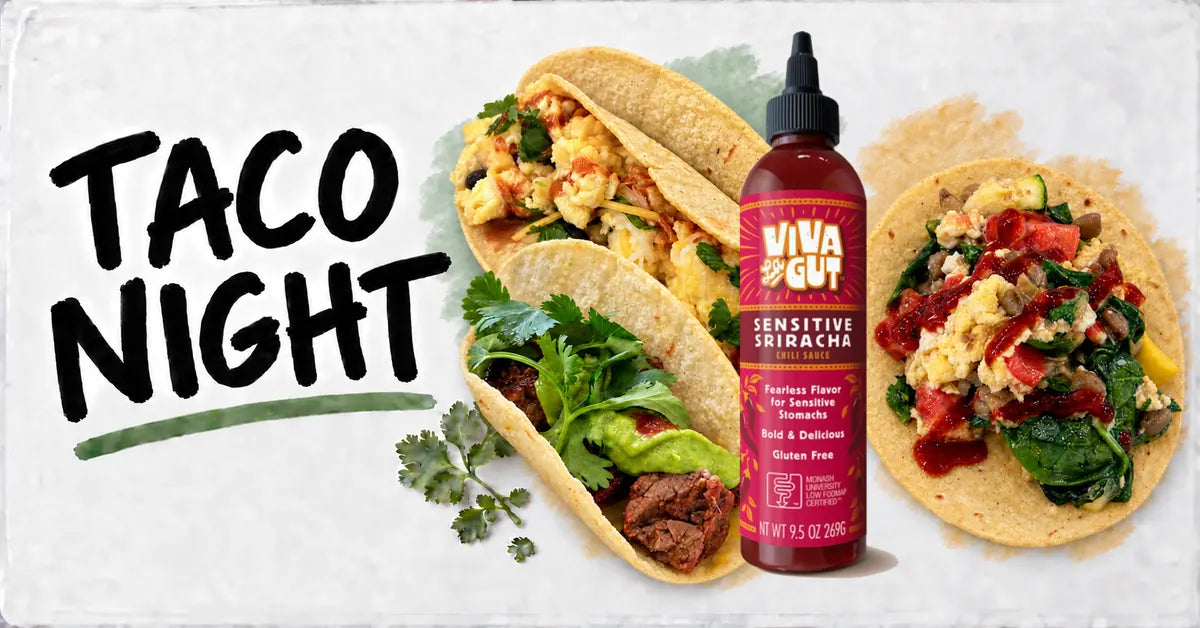
Sensitive Sriracha by Viva La Gut is Monash University Certified Low FODMAP. It's made without garlic bulb or onion, using garlic-infused oil instead. Fructans aren't oil-soluble, so they don't transfer into the oil during infusion. That's why garlic-infused oil is considered low FODMAP by Monash University, even though garlic bulb itself is not. The result is real flavor with the lab work to back it up.
Tips for Using Monash Certification in Your Routine
- Start with certified products when rebuilding your pantry. They take the guesswork out of your first grocery runs on a Low FODMAP diet.
- Use the Monash app as your shopping companion. It's updated regularly and includes both whole foods and certified products.
- Don't assume all "health" brands are tested. Organic, natural, and clean-label products still need to be evaluated for FODMAP content. The ingredients might be high quality and still high FODMAP.
- Stick to the listed serving sizes. Certification is tied to a specific amount. Going over that amount changes the FODMAP load.
- Keep certified staples on hand. Having a few go-to sauces, seasonings, and pantry items that you trust makes daily cooking less stressful.
Frequently Asked Questions
Is Monash Certified the same as FODMAP Friendly?
No. Monash Certified Low FODMAP and FODMAP Friendly are two separate certification programs run by different organizations. Monash University developed the Low FODMAP diet and runs their own testing lab. FODMAP Friendly is an independent certification body. Both involve lab testing, but they're not interchangeable.
Can a product be low FODMAP without being Monash certified?
Yes. Some products are naturally low in FODMAPs without going through certification. But without testing, you're relying on ingredient lists alone, and those don't tell you FODMAP levels at specific serving sizes. Certification removes the guesswork.
Does Monash certification mean I can eat unlimited amounts?
No. Certification applies to a specific serving size. A product can be low FODMAP at the tested amount and high FODMAP if you eat significantly more. Always check the serving size listed in the Monash FODMAP app.
How do I find Monash Certified products?
The easiest way is through the official Monash University FODMAP app, available on iOS and Android. You can search by product name or browse certified items. Look for the green light rating at the listed serving size.
Is the Monash FODMAP app free?
The app has a one-time purchase price. It includes the full food database, certified product listings, and regular updates as new foods and products are tested. Most dietitians consider it the single most useful tool for following a Low FODMAP diet.
Why is garlic-infused oil low FODMAP if garlic isn't?
Fructans, the FODMAPs in garlic, are water-soluble but not oil-soluble. When garlic cloves are infused in oil, the fructans stay in the solid garlic and don't transfer into the oil. The oil carries the flavor without the FODMAPs. This is why garlic-infused oil is considered low FODMAP by Monash University.
What's the difference between "low FODMAP friendly" and "Monash Certified Low FODMAP"?
Monash Certified Low FODMAP means the product has been lab-tested by Monash University and confirmed safe at a specific serving size. "Low FODMAP friendly" is an unregulated phrase any brand can use without testing. Only one comes with lab data behind it.
Flavor you don't have to question
Sensitive Sriracha is Monash University Certified Low FODMAP. Made without garlic bulb or onion. Lab-tested so you don't have to guess.
Try Sensitive SrirachaViva La Gut makes Monash-certified low FODMAP sauces for people who refuse to settle for bland. Every product is designed for sensitive stomachs and formulated to actually taste good. Because you shouldn't have to choose.
Comments